






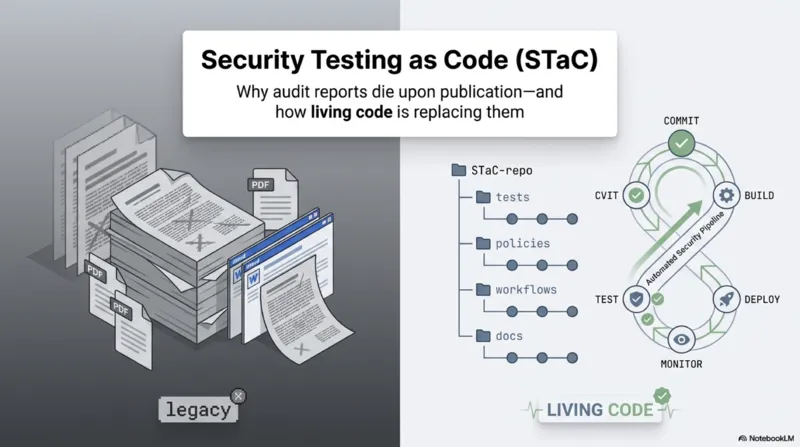
Security Diagnostics Reports Die Upon Publication
Related Video PDF Open (new tab): /pdf/Security_Testing_as_Code_en.pdf If you can’t view the PDF, open it here: /pdf/Security_Testing_as_Code_en.pdf ...
Related Video PDF Open (new tab): /pdf/Security_Testing_as_Code_en.pdf If you can’t view the PDF, open it here: /pdf/Security_Testing_as_Code_en.pdf ...
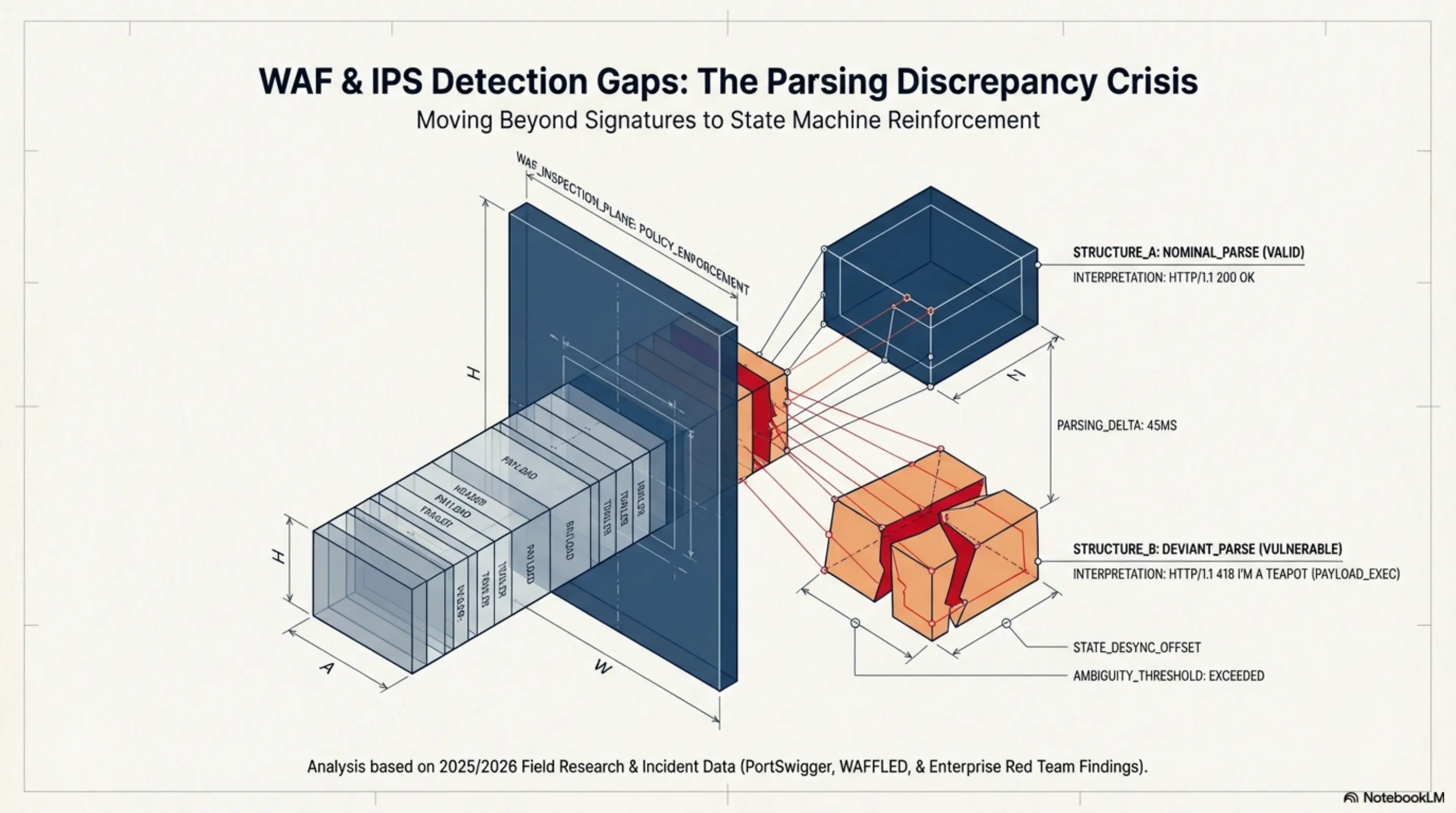
A structural analysis of WAF, IPS, and IDS detection gaps, focused on parsing discrepancies, visibility failures, and practical remediation priorities.
Contracts enforce decisions. Governance makes the decisions worth enforcing—a structural reframing for contract-centric security leadership.
A governance, privacy, and operations comparison between the EU’s eIDAS 2.0 (EUDI Wallet) and Korea’s mobile ID plus private identity verification (CI/DI) ecosystem.
Using Amadey as a case study, this post compares static signature detection and memory-based detection through structure, evasion difficulty, and YARA usage.
A practical, research-informed look at why transparent internal vulnerability visibility can increase remediation participation and improve patch outcomes—through accountability, perceived surveillance, and deterrence mechanisms.
Why continuous visibility and attack surface management (ASM) are essential in 2025, with key trends, survey insights, and practical takeaways.
Preface: The Crack Between Philosophy and Execution First half of 202x. When the group’s penetration test report stated, “SQL Injection possible in WAF-unprotected section,” the CISO was silent for a while. The report was blunt, the attack was classic, and there was no defense. “Was I wrong? Or did they misunderstand my intention…?” The CISO was a leader of strong conviction. He believed that with a strategy of “IPS + security by design,” it was possible to build a system robust enough to forgo WAF deployment. In fact, for years, this strategy contributed to the organization’s threat detection and incident prevention. ...
No Silver Bullet: Folklore & Modern Meaning The phrase “no silver bullet” originated in European folklore, where silver bullets were believed to be uniquely effective against supernatural creatures like werewolves or vampires. The earliest documented use appears in Walter Scott’s 1816 Tales of My Landlord, and historical cases such as the 1765 Beast of Gévaudan reference silver bullets as a last resort against mysterious threats. Over time, the expression evolved: today, “no silver bullet” means there is no single, simple solution to complex problems—a message popularized in software engineering by Fred Brooks’ 1986 essay. This post applies that lesson to SSRF defense: beware of one-size-fits-all fixes, and look deeper than folklore or quick patches. ...
Analysis of potential Remote Code Execution vulnerability in OpenStack Nova’s exception serialization mechanism, including multiple PoC scenarios and defense recommendations.